In the future, a model of classroom and distance education will coexist: Esteban Moctezuma Barragán.
The Secretary of Public Education, Esteban Moctezuma Barragán, heads the XLIX virtual Ordinary Meeting of the National Council of Educational Authorities.
In this new hybrid model, the professionalism of the teachers, as always, is irreplaceable: Moctezuma Barragán.
The need for adaptation and change, demanded by the current situation, led to the creation of the Healthy Living course, he emphasized.
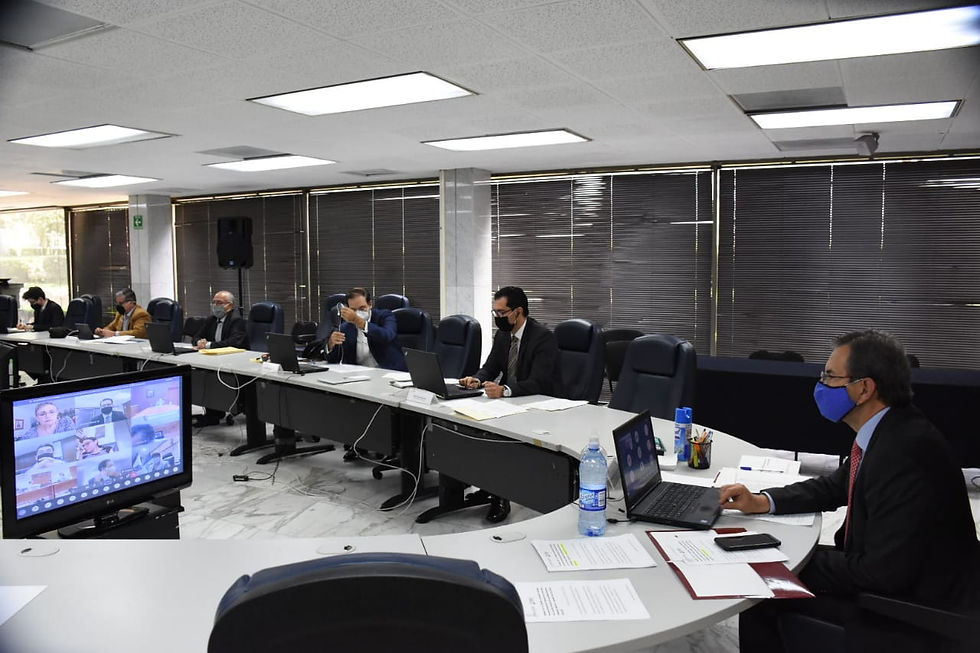
The pedagogical approach that will survive into the future will be a hybrid model, where both distance education and face-to-face education are present, according to the needs of each of the state educational systems, said the Secretary of Public Education, Esteban Moctezuma Barragan.
At the head of the virtual meeting of the XLIX Ordinary Meeting of the National Council of Educational Authorities, Moctezuma Barragán, noted that, in this new hybrid model, national teachers, as always, are irreplaceable, also recalled that during the He had a pandemic to overcome and overcome many obstacles, recognizing that the majority of students, of all educational levels, continued and finished their learning.
He also reminded the country's Secretaries of Education that nine interventions or measures will be applied to ensure the well-being of the school community when they return to face-to-face classes, as long as the epidemiological traffic light is green, and depending on the evolution of the pandemic in each state.
The first will be the activation of the Participatory School Health Committees, which were established mainly before leaving schools due to sanitary confinement; the second will be access to soap and water in schools.
As a third, there is the care of teachers, particularly those who are in risk groups, for which an agreement will be signed with the Institute of Security and Social Services of State Workers (ISSSTE) to promote their access to health and medical care.
The fourth intervention will be for the general and adequate use of masks, in all schools; the fifth is the healthy distance between school entrances and exits and recesses, which must be staggered, and alternative attendance at school.
For the sixth intervention, we consider maximizing the use of open spaces: the more they are used in schools, the better. In the seventh intervention the suspension of any type of ceremonies that generate congregations in the school is considered; as eighth, early detection is established, where with a single patient at school, it will be closed for 15 days; and the ninth, socio-emotional support for teachers and students.
Likewise, Moctezuma Barragán pointed out that the adaptation and change needs demanded by the current situation gave way to the creation of the Healthy Living course.
He specified that prior to the start of preventive isolation, various strategies were proposed with the accompaniment of the Secretaries of Health and the Environment, the Mexican Institute of Social Security (IMSS), the National Institute of Public Health (INSP) and the Federal Consumer Attorney's Office. (PROFECO).
The objective of this new subject, he pointed out, is to generate a change in the lifestyle of Mexicans, as well as a cultural change that modifies consumption patterns. The pandemic taught us that different chronic degenerative diseases persist, such as diabetes and hypertension, derived from poor diet and lack of physical activity.
The Secretary of Public Education reported that the three pillars of this strategy are programs aimed at improving the nutrition of children and youth; instill hygiene and cleanliness habits, and stimulate physical activation and sport as a fundamental part of school life.
"It will be related to other types of subjects and activities such as music, dance, chess, among others, because mental health is also sought," he added.
Healthy Living is integrated into the curricula and programs as an articulated axis in the national curriculum and not just as an additional subject, he announced.
For Primary four axes and 11 subjects are considered; In the Humanities and Healthy Living axis, the subjects of History, Geography, Arts, Healthy Living, Physical Education, Socio-emotional Education, and Civic and Ethical Training are integrated.
He recalled that the constitutional reform in the field of education proposes an education for life, so the integration of this type of content is a very solid step in that objective.
Likewise, he commented that Civismo aims to incorporate a new content on addiction prevention, to help young people be happy without the use of addictive substances.
The head of the SEP specifies that the Healthy Living course deals with nutrition issues; hygiene and cleanliness; physical activation and school sports; addiction prevention; and mental health, and equally, responds to the need for a new comprehensive approach that involves social and commercial determinants of health.

Finally, Moctezuma Barragán thanked the members of CONAEDU for the effort they had from their federal entities to make the period of conclusion of the 2019-2020 School Year a success, and considered that it has been a historical experience for the National Educational System.
The Undersecretaries for Basic Education, Marcos Bucio Mújica, and for Higher Secondary Education, Juan Pablo Arroyo Ortiz, participated in the virtual meeting.
_____________________
Author: Secretary of Public Education
Publication date: July 22, 2020
Link: Bulletin No.196

Comentarios